Friday, 5 December 2014

Monsters // Vertigo Films


Information: 
  Plot: After  a NASA deep-space probe crash lands in Mexico, extraterrestrial life forms spread throughout the Mexico-United States border region, leading to the quarantine of the northern half of Mexico. US and Mexican troops battle to contain the creatures, while a wall stretching along the American border ostensibly keeps the US protected.

 Filming: This film was shot using prosumer cameras instead of the more expensive 35mm film cameras. Many settings featured in the film were real locations (ofter used without permission) and most of the extras were people who were already at the filming location. As most of the extras were non-actors who were persuaded to be in the film their action was improvised.

Editing and effects: Every night after shooting, the editor and his assistant would download the footage so the memory sticks could be cleared and ready for the next day. While new footage was being captured, the previously filmed footage was edited at the production team's hotel.

Edwards created the special effects himself using off-the-shelf Adobe software, ZBrush and Autodesk  He had five months to create all 250 visual effects shots, he did all of this in his bedroom.


Tuesday, 2 December 2014

Our Pilot Video and Evaluation

What were you filming and why?
We decided just to film the corridor part of our sequence because the part with the floorboards would have been hard to film at this moment in time and this is one of the main parts of the sequence that we will film so we wanted to make sure that it looked okay.


What substitutions did you make in the test filming and why?
We used Sasha and India to play the parts of the characters because we filmed this during a lesson so the actors who we are going to use weren't around for the test filming.
When Sasha first walks down the stairs we didn't have her dragging the body because it could have been dangerous to drag someone down the stair when we don't know exactly how we are going to go about doing it.


What camera angles and camera movements were you testing?
We were just filing the basic camera angles of this scene so we could get a feel to how it would look.

We did a high mid shot at the beginning of Sasha walking down the stairs:


Close up of the feet being dragged:


Long shot of India being dragged by Sasha:


Mid shot of Sasha opening the basement door:


Low angled mid/long shot of India lying on the floor while Sasha walks around her:


Low angled shot of Sasha going into the basement:


Did you find this process useful as a group?
Yes, we found this process useful for the group because it helped us imagine what we needed to do for the day of the shoot and what type of shots we had to get. It also helped us to see where we are going to shoot our final sequence.


What worked well?
Our setting worked well because we were able to see where we needed to shoot out sequence and it gave us an image in our mind as to what it will look like in the end. The camera work went well because we were able to see what angles and movement worked well and what we might change.  The location was good because it was where we wanted to film and it worked out and fitted what we wanted to do.


What didn't go well?
Some things didn't go well, this was one of the angles were Sasha was going down into the basement, tis didn't work well because we would have to be inside the stairs to film the shot and the stairs are really steep and narrow so may be hard to film. The timing was okay but we need to come together to talk about the exact timing we want to make the sequence look good.
We lost a bit of the tension when filming because it wasn't the actual thing so we didn't have the right lighting, costume, makeup and actors so this may have made our pilot have less tension than our actual sequence.
The location did look right but we have to work out how we are going to film the floorboards and make it look good and effective. We also have to be careful of when Sasha pulls the body under the floorboards because the corridor is made of cement and not wooden floorboards like we want.


How has this influenced you with the next stage of your idea?
This has influenced the next stage of our idea because we need to figure out small details and just make sure we all have the same image in our head of what we want our final piece to look like. It has also made us think of how we will capture the tension in the film and not make it look to overdone.

Filming a Pilot

What is a pilot? Why use one?
A pilot is a test shoot, so it sees if our location is correct, it makes us see what angles we need to get and is basically a really rough copy of our end product.

What is in-camera editing?
In-camera editing is a technique where instead of editing the shots in a film into sequence after shooting, you instead shoot the sequences in the correct order. This results in the "editing" part already being complete

How useful is this as a planning exercise?
This is very useful in a planning excersise because it helps us to see what shots may work and what won't. It also helps test if the location is right and if we need to change any aspects of our opening sequence.


For our pilot we went to the corridor that we were going to use and had a look at the basement:


Floorboards - Storyboard

Monday, 1 December 2014

Matts Response to our Idea

In the lesson India, Sasha and I spoke to Matt about our opening sequence idea.
We explained what we wanted to film and how we were going to achieve it.
When we pitched our concept Matt really liked the idea about the girls under the floorboards all on top of each other so he  said to start with that image and expand from it. This gives our sequence a strong starting point and we can really focus on one key point and not over complicate it. 
We had an idea to have a girl running through a woods but Matt said that is being done a lot and maybe it's a bit too overdone so we should think of a different idea to replace it. This helped us to focus our idea on just one thing and not to make our whole sequence over complicated.

Matt also recommended that we should use a real life which story so it can influence the Mother Shipton character and give her a reason for her killings.
In our research we found Jenny Greenteeth:


^ Taken from Listverse

We  chose this witch because it says that she is "just a sadist who enjoys pain her victims go through", which we thought fitted our character, Mother Shipton.

Tuesday, 25 November 2014

Storyboarding

In this lesson we started to think about how to storyboard. We discussed how story boarding can help people shoot a film. It is useful because the film maker can see what shots they need to get and if there is annotation on the side it can help them to remember extra details like lighting, sound and the type of transition. This is very helpful because it can help people not miss out shots and to keep a track of the shots they have done previously.
We then watched a video about how to storyboard if you can't draw. This was useful because it showed us that you don't need to be an artist to storyboard you just need to make your ideas clear.

 We looked at an example of a storyboard:


We then got given our own template to start working on:

Friday, 21 November 2014

Our Mood Board

Our mood board consisted of ghosts, witch symbols, the woods and our location of filming.

Thursday, 20 November 2014

Genre in Institutions

Repeating a genre helps the producers to recognise this as a formula to use and this will set up expectations for the audience. 

The main reason why we have repetition of content and treatment is because it sells. However, it still has to be attractive to the audience.
A genre is a type or category of media product, like a supernatural thriller. It is the predictability and repeated elements that define a film genre and how it is different form other genres. When two genres are mixed together it is called a hybrid. 

Genres are good for industry because they make profit for them - film sequels, TV series etc. They are good profit because the audience pays for them consistently. The audience is attracted to genre material and pays for it because they take pleasure and satisfaction from the material. 

Genre is useful for film distribution companies because they know what the audience like and expect to see on the posters and trailers etc. 
Genre is also useful for film production because they know what the audience are expecting to see because of the theme within the genre. This can help fulfil the audiences expectations. 

Wednesday, 19 November 2014

What thriller sub genre is our opening sequence??

What sub genre is our opening sequence? 
Our opening sequence is a sub-genre thriller as it has supernatural elements as well as thriller elements. So therefore I would describe our opening sequence as a supernatural thriller.
However are opening sequence may also have elements of a psychological thriller sub genre as well.

What is a supernatural Thriller?
Supernatural thrillers are very similar to horror films but are often not as violent. The character (could be hero or villain) has some sort of supernatural power that must be called upon. Supernatural thrillers often find the protagonists either battling an evil paranormal force or placed in a situation controlled by an other-worldy force beyond their comprehension. 
Examples:


What is a psychological thriller?
A psychological thriller messes with your head. In these types of thrillers the suspense is character-driven rather than action-driven. Characters play deceptive games and try to destroy one another. Sometimes the conflict exists within one characters mind. 


Monday, 17 November 2014

Thrillers and Genre

What is a thriller genre?
Thriller is a genre of literature, film, and TV that uses suspense, tension, and excitement as its main elements. Thrillers heavily stimulate the viewer's moods, giving them a high level of anticipation, uncertainty, surprise, anxiety and terror.
A good example of this is the opening sequence to Se7en:

What are the conventions of a thriller?
- Low key lighting
- Quick cuts
- Shadows
- Tension Music
- Diegetic sound of breathing

Sub-genres of Thrillers? 
Action Thriller: These films are characterized by fast-paced, hero-centered narratives full of action and excitement. They often have elements of mystery and crime films, but these elements take a back seat to the action.


Crime Thriller: These films often focus on criminal dealing with a successful or failed crime and the suspenseful results. Common themes include robberies, murders and double crosses.
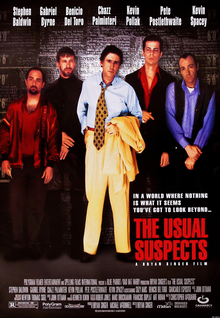
http://upload.wikimedia.org/wikipedia/en/9/9c/Usual_suspects_ver1.jpg


Disaster Thriller:

These films deal with some type of disaster, either natural or man-made. Along with sometimes showing the disaster itself, these films concentrate on the chaotic events surrounding the disaster, including survival strategies and the effects on the characters and their loved ones.


Genre


What is a genre, sub genre and hybrid genre?

Genre: A style or category of art, music or literature eg.thriller

Sub-genre: A subdivision of a genre of literature, music, film, etc. eg a supernatural thriller
http://www.scifiscoop.com/wp-content/gallery/movie-posters/dorian_gray_poster_2.jpg


Hybrid Genre: Blends themes and elements from two or more different genre eg Romantic Thriller

http://wpc.556e.edgecastcdn.net/80556E/img.site/PH5Aux01xjBX89_1_m.jpg
Why is genre used?
Genre is used to make sure the audience know what they are going to see. It helps gives the film a target audience and it helps support the audiences expectations. 

What are genre conventions?
Genre conventions are the defining aspects of any genre or subgenre.
A genre convention is a typical or standard plot, character, setting, theme, or effect in a genre story. For example, in a Western it is conventional to have the heroes wear white hats and the villains wear black hats or in the superhero genre, it is a convention to have the characters wear costumes. However, if these conventions get over used they can become cliche.


Friday, 14 November 2014

Initial Ideas for Thriller Opening Sequence

I am working in a group with Sasha and India 

Our Thriller Idea: 

We decided to do a a mixture of all our initial ideas.

Here is the brainstorm we came up with:


The Plot: Witch disguised as a teacher kills girls in a boarding school and hides their bodies in a abandoned wine cellar. The ghost of the dead girl come back to haunt another girl in the school and cuts her body. This makes the girl want to escape but Mrs Shipton captures her and carves satanic symbols before killing her and locking her body in the cellar with the other bodies.


The Opening Sequence: Women pushing symbol covered arm into cellar and locking it before walking away holding a bloody covered knife. The shot then cuts to a girl sitting at her desk working when the hand of a ghost lands of her shoulder leaving cuts dripping with blood on her shoulder. Scared, she gets up and leaves the school when Mrs Shipton appears from behind a tree. You then hear a screams as the scene cuts to the cellar door slamming shut again.


We were looking at different opening sequences and one which really stood out for us was the American Horror Story's season 3 opening. This is because it is based around witches so it had symbols incorporated into it and it looked quite ghostly which is what we are aiming for.


Thursday, 6 November 2014

Analysis of Preliminary Task

Our Preliminary task: 


Analysis: 

Shot 1:
  • We started with a low angle focusing on the feet as the door opens
  • You here the door open and squeak 
Shot 2:
  • We then cut to an wide angle shot as we see Rebecca cross the room
  • We hear the end of the squeaky door
Shot 3:
  • Next we cut to a close up of the paper and pencil being thrown down on the table 
  • You can hear the paper and pencil hit the desk so this is match on action sound. 
Shot 4:
  • We then cut back to the wide angle shot as we heard Rebecca and Christina exchange a few words.
Shot 5:
  • Then we cut to a high angle over the shoulder of Rebecca
  • This symbolises that Rebecca has more power in the situation so is intimidating to Christina
Shot 6: 
  • We then cut to an low angle close up of Christina as she says her line
  • We did this so you can clearly see her reaction when she speaks
Shot 7: 
  • Then we cut to back to the high angle over the shoulder shot of Rebecca
  • This again makes Rebecca look like she appears to have more power in the situation
Shot 8:
  • We then cut to the wide angle
  • We did this so you can clearly see the height difference between the two characters and so you can see how the power differentiates between to two of them 
Shot 9:
  • We cut back to the low angle over the shoulder shot of Christina
  • This again shows how she is the weaker one in the situation
Shot 10: 
  • Next we cut to a mid shot of Rebecca leaving and the door starting to close
  • You can start to hear the squeak of the door which is diegetic sound
Shot 11:
  • We cut to a super close up shot of Christina's face 
  • We did this so we can see her reaction clearly 
Shot 12:
  • We cut to the end of the door closing 
  • We did this so it leaves the audience wondering what will happen next

I think that we were successful because we made a simple preliminary task that enabled us to practise filming with the cameras and editing with Adobe Premiere.
We have learnt how to use the cameras properly and how to film so for example we had to do the wide angle first so we get an idea of what the scene is and then we go on to film the other shots in the scene and if we had time we filmed more detailed shots. 
So overall I think we were successful.


Editing The Preliminary Task

With the footage that we shot for our preliminary task we started to edit it, I was paired with Rebecca Neilson.
We were shown the basics on how to edit on Adobe Premiere. We were taught how to make "bins" to help organise our raw footage. We then named our footage so we can easily find it.
We then dragged our footage and started to edit it. We had to make the cuts clean and smooth and make sure the continuity was correct.


Here is the final edited video: